| |
| Tuesday 13 October 2026 |
| Northern Lights: The Influence of Netherlandish Art on the Italian Renaissance |
| James Lindow |
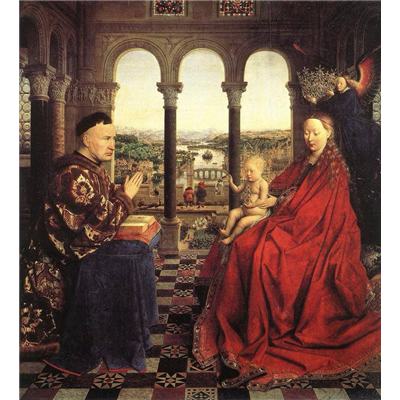 |
This lecture considers the influence of the art from the Low Countries on Italian Renaissance art. Generally considered a one-sided cultural exchange from the South to the North, this talk demonstrates the significance of Flemish art for its innovations in the medium of oil, landscape painting and portraiture. Focusing on the example of Florence, the impact of Netherlandish art is considered from the perspective of the Medici and leading patrons together with painters including Botticelli, Ghirlandaio and Leonardo. James Lindow was the first Renaissance PhD from the Royal College of Art and the V&A. He has convened and presented at international conferences, lectures widely in the UK and overseas and is currently a fine art underwriter in the City. He has written articles on diverse aspects of the Renaissance, and his book entitled The Renaissance Palace in Florence: Magnificence and Splendour in Fifteenth-Century Italy was published by Ashgate Press in 2007 to widespread critical acclaim. |
|
| Tuesday 10 November 2026 |
| George Villiers, Duke of Buckingham: The Handsomest Man in 17th Century Europe and his Patronage of the Arts |
| Lucy Hughes Hallett |
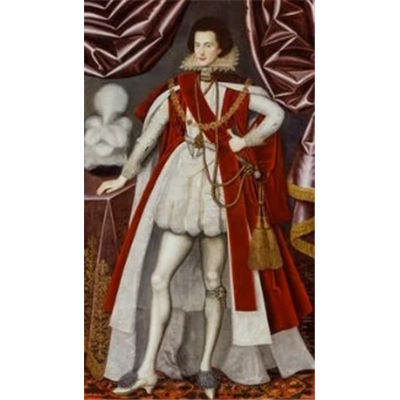 |
A king's favourite who amassed a great art collection. George Villiers, Duke of Buckingham, was the favourite of King James I - who addressed him as ‘my sweet child and wife’ - and subsequently chief minister to King Charles I. Buckingham was a beauty, and he surrounded himself with beautiful things. He enjoyed exquisite clothes, like the fabulous white silk suit encrusted with diamonds that he wore to visit the Queen of France. He was a superb dancer. When he cut capers during a court masque King James startled visiting ambassadors by shouting out ‘By God, George, I love you!’ Lucy Hughes-Hallett's most recent book on the 17th century Duke of Buckingham, The Scapegoat, has won the Plutarch Award for Biography of the Year and the Randy Shilts Award for Non-Fiction. Her previous biography, The Pike: Gabriele d’Annunzio was described in The Sunday Times as ‘the biography of the decade’. It won the Samuel Johnson Prize, the Duff Cooper Prize and the Costa Biography Award. Her other non-fiction books include Cleopatra and Heroes. She also writes fiction. Her novel, Peculiar Ground, is largely set in the 17th century, and narrated by a landscape designer loosely based on the diarist John Evelyn. It was described as 'almost Tolstoyan in its sly wit and descriptive brilliance' (The Guardian) and 'full of drama, vivid characters, wit, gorgeous writing and fascinating detail’. (New York Times). A Fellow of the Royal Society of Literature and of the Historical Association, she is a widely respected critic. She was Chair of the Judges for the 2021 International Booker Prize. |
|
| Tuesday 8 December 2026 |
| The Dance of the Sugar Plum Fairy: The Christmas Story of Tchaikovsky and the Nutcracker |
| Rosamund Bartlett |
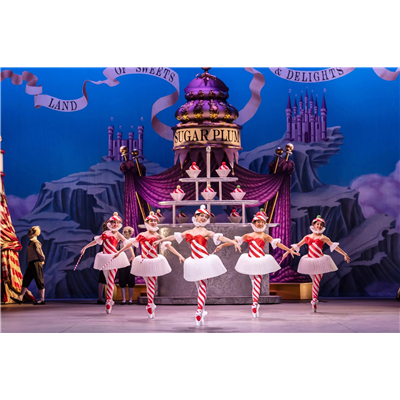 |
Before The Nutcracker became everybody's favourite Christmas ballet, it was staged in Tsarist Russia. With reference to the glorious history of the Imperial Ballet company in St. Petersburg, this lecture discusses how Tchaikovsky came to write his magical score and Petipa created its choreography, and also tells the story of the dancers who created the leading roles. It also explores Tchaikovsky's role in transforming classical ballet into the vibrant art form it is today
Rosamund Bartlett is a writer, lecturer and translator whose work ranges across the arts, and across the cultures of Europe, from Italy to Norway. She began her career as an academic in Slavic studies after completing her doctorate at Oxford, and has held fellowships both in the UK and at the European University Institute in Florence. In 2024 she became a Royal Literary Fund Fellow at Brasenose College, Oxford. |
|
| Tuesday 12 January 2027 |
| Crystal Clear: European Glass 1450-1900 |
| Simon Cottle |
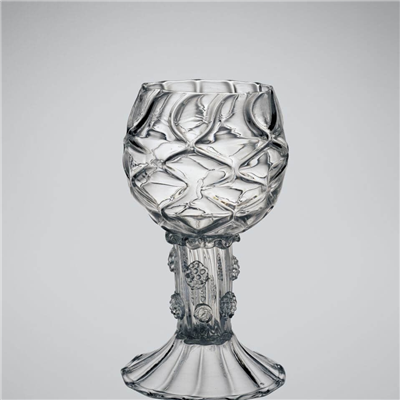 |
Throughout the 15th and 16th centuries the glass makers of Venice were dominant in Europe. However, the movement of impoverished glass-making and glass-decorating families away from their virtual imprisonment on the island of Murano, enabled the city state’s influence to spread north of the Alps. Taking their artistry to Germany, the Netherlands, France and England
Simon Cottle is a leading international specialist, author, auctioneer and lecturer in British and European Glass, now retired. Formerly Managing Director (Bonhams Europe) and Director of European Ceramics and Glass at Bonhams Auctioneers, London (2007-2023). Formerly Head of European Ceramics and Glass at Sotheby's, where he was also a Director and auctioneer (1990 to 2007). He is responsible for numerous landmark auctions of European Glass both at Sotheby's and Bonhams. After studying History at University College Cardiff and the University of Washington and holding a postgraduate diploma in Museum and Art Gallery Studies from Manchester University, he began his career as a senior curator of ceramics, glass and silver at museums in London, Newcastle-upon-Tyne and Glasgow (1979-1990). He is Hon. President of the Glass Society, Fellow of the Guild of Glass Engravers and a Fellow of the Corning Museum of Glass, New York.and as far afield as Scandinavia, the Venetian craftsmen enlivened the industry Europe-wide. |
|
| Tuesday 9 February 2027 |
| The Astors: A Family of Great Philianthropists and Collectors |
| Andrew Hopkins |
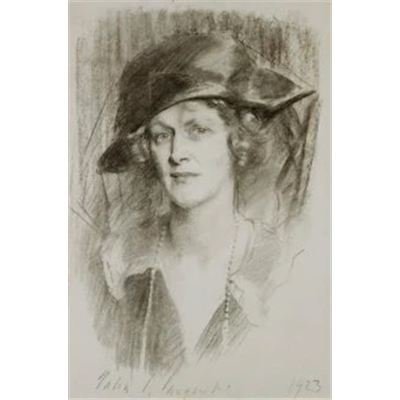 |
I imagine most of you will have visited Cliveden, the Italianate mansion set in the Chiltern Hills, the home of the Viscounts Astor during the 20s and 30s, when it became the meeting place of the Cliveden Set. Indeed, Nancy Astor was the first female member of parliament serving from 1919 until 1945. Although most people think of the Astors as a great philanthropic family of New York in the 19th and 20th centuries, it was the branch in England who gave Cliveden to the National Trust in 1942, together with a quarter of a million pounds – today about 15 million quid.
Andrew Hopkins was previously Assistant Director of the British School at Rome from 1998 to 2002 and since 2004, Professor at the University of L'Aquila. Part of his PhD (Courtauld Institute 1995) on Venetian architecture was awarded the Essay Medal of 1996 by the Society of Architectural Historians (GB). A Fellow at Harvard University's Villa I Tatti in Florence in 2003-2004, and in 2009 was the Paul Mellon Senior Visiting Fellow, Center for Advanced Studies in the Visual Arts, National Gallery of Art, Washington D.C. Amongst his many publications are, with Arnold Witte, Alois Riegl, The Origins of Baroque Art in Rome (2010), and Baldassare Longhena and the Venetian Baroque (2012). |
|
| Tuesday 9 March 2027 |
| The Palaces of India |
| John Stevens |
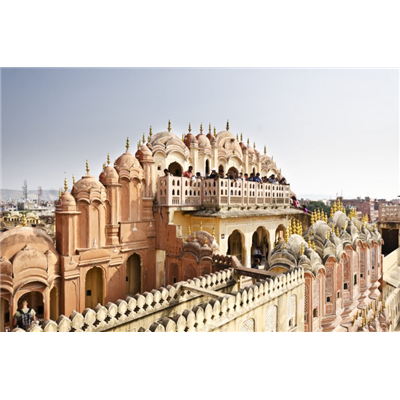 |
India’s royal palaces are magnificent, historic residences reflecting a blend of Rajput, Mughal and European architectural styles. This lecture takes you inside numerous stunning examples, including the incomparable Laxmi Villas Palace in Baroda (the largest private residence in the world) and the striking art deco Umaid Bhawan. As well as exploring the sublime architecture of the buildings and the beautiful works of art they contain, the lecture also looks at the historical contexts of their construction and the fascinating lives of their most notable residents.
Dr John Stevens is head of the London Bangla Academy, an online school that teaches the Bengali language to students across the world. He gained his PhD in History from UCL, before going on to teach British Imperial History, Indian History and Bengali Language at SOAS, University of London. His biography of the Indian guru Keshab Chandra Sen – Keshab: Bengal’s Forgotten Prophet - was published by Hurst and Oxford University Press. He is a regular visitor to India and Bangladesh and has lectured at numerous Indian universities. He also works as a consultant on Indian affairs. He has appeared many times in the Indian media, and was a guest on BBC Radio Four’s In Our Time, discussing the poet and artist Rabindranath Tagore. |
|
| Tuesday 13 April 2027 |
| The Brilliance of Brunel: The Man Who Built The Modern World |
| Ian Swankie |
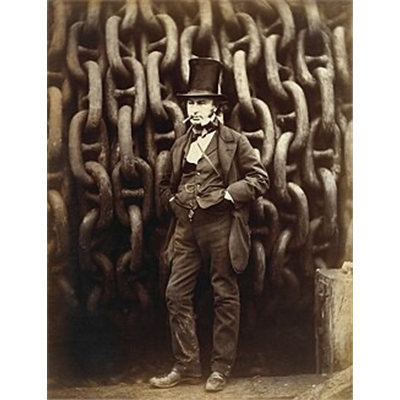 |
We are still living amongst the infrastructure created by Isambard Kingdom Brunel in the 19th century. He changed the face of the English landscape with his ground-breaking projects including railways, bridges, tunnels, ships, and grand buildings such as the magnificent Paddington Station. He merged art with engineering and science and was a pioneer and a revolutionary. And he was brilliant. We'll look at the man, his background, his work, and his legacy.
Ian Swankie is a Londoner with a contagious enthusiasm for art and architecture, Ian is an official guide at Tate Modern, Tate Britain, Guildhall Art Gallery and St Paul’s Cathedral. He is also a freelance London tour guide. Since 2012 he has led a popular weekly independent art lecture group in his home town of Richmond in West London. He is an Accredited Lecturer of The Arts Society and a Freeman of the Worshipful Company of Art Scholars, one of the City Livery companies. |
|
| Tuesday 11 May 2027 |
| The Double Life of John Maynard Keynes |
| Howard Warburton |
 |
This lecture will focus on the art John Maynard Keynes loved, acquired, collected and promoted, plus several paintings that he and his wife sat for. The lecture will feature paintings by Cezanne, Delacroix, Derain, Manet, Picasso, Seurat, Sickert and others. In some circles, Keynes is well-known as an economist whose ideas had a profound impact on society in the inter-war years. At the same time, he was a core member of the Bloomsbury Group. He was closest to Vanessa Bell and Duncan Grant, and funded much of their work, and organised shows of their paintings, some of which will also be covered in the lecture. Keynes even had a room of his own at the Charleston Farmhouse, which he helped to make habitable. In 1918, on behalf of the Treasury, and encouraged by the Bloomsbury Group, Keynes organised the purchase of many French paintings thereby helping France to pay off its war debts, while at the same time building up the collection of the National Gallery. Thereon, he became an avid collector of art for his own satisfaction, his purchases being funded out of his activities as shrewd private investor. In 1946, two years after helping to bring stability to world fiscal affairs at Bretton Woods, he founded and chaired the Arts Council of Great Britain. On his death, he bequeathed his own considerable personal collection of art to the Fitzwilliam in Cambridge. With regard to his personal life, Keynes had affairs as a young man with both Lytton Strachey and Duncan Grant. But then to everyone's surprise, he fell in love with, and married, a Russian ballerina. The importance of these relationships to his life and work will be brought out during the lecture. At the same time, national and world events, in which he played a key part, will be briefly mentioned to provide a context for his love of art and to reflect his remarkable double life.
Ray has had a life-long love of art. However, in his twenties, Ray studied social sciences at the London School of Economics and the School of Oriental and African Studies. These studies led to a career in health and social care, with art being an evening and weekend passion. But all that changed in 2011, when Ray became a guide at Tate Britain and Tate Modern. Then from 2014 to 2017, he studied art history at the Open University, and then at the University of Buckingham, from where he gained an MA in the History of Art. And to cap it all, Ray became an Arts Society lecturer in 2017. Ray also knows what it’s like to be on the receiving end of lectures as he is a member of his local Arts Society in Blackheath. |
|
| Tuesday 8 June 2027 |
| A Walk Through History: The Parks and Gardens at Blenheim Palace |
| Antonia Keaney |
 |
A look at how the Blenheim landscape has developed from the formality of Henry Wise through to the natural landscape created by Capability Brown. This talk takes us right up to the present day and examines some of the decisions and plans - both popular and in some cases less so - made by Blenheim's new Head Gardener.
Antonia joined Blenheim Palace in 2008 as a member of the Education Team, later becoming the Palace’s Social Historian and Researcher. Both roles have involved her curating or co-curating a number of Palace exhibitions including A Passion for Fashion – 300 Years of Blenheim Style upon which her recent book is based. Antonia’s latest project has been to produce a series of podcasts - Behind the Scenes at Blenheim Palace. Antonia has participated in both the Oxford Literary Festival where she presented her children’s book and more recently at Cheltenham where she chaired a discussion between authors Emma Soames and Rachel Trethewey on their respective Churchill related books. Antonia has been a guest on Radio 4’s Saturday Live with the Reverend Richard Coles and has made various TV appearances including Channel 5’s The Cotswolds with Pam Ayres and Blenheim Palace - Behind the Grandeur. In her spare time, Antonia enjoys the company of her family and her dogs – particularly Percy, a wire-haired Dachshund, who inspired her to write and illustrate her first children’s book – Percy at the Palace - A Dog’s Eye View of Blenheim. She is currently researching her next book on Blenheim Palace and World War II. |
|
| Tuesday 13 July 2027 |
| Rembrandt - Painter of Humanity |
| Stella Lyons |
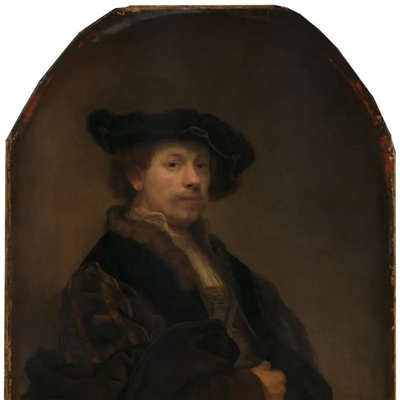 |
Rembrandt was a painter of humanity. Of life. Of imperfections. We cannot overestimate the importance of his vast output within the History of Art. And yet his story was a tragic one. His life ended miserably with bankruptcy, loss and burial in a pauper’s grave. Rembrandt’s paintings are characterised by drama, directness and his masterly use of light. This talk will explore some of his finest masterpieces, including ‘The Night Watch’ and ‘The Anatomy Lesson of Dr. Nicolaes Tulp’.
Stella Grace Lyons is a freelance Art History lecturer, speaker and writer accredited with The Arts Society. She has lectured across the UK, Ireland, Spain, Norway, Germany, Belgium, the Netherlands, Italy and Malaysia. Stella gained her BA in the History of Art with a 1st class in her dissertation from the University of Bristol and her MA in History of Art from the University of Warwick. She spent a year studying Renaissance art in Italy at the British Institute of Florence and three months studying Venetian art in Venice. In addition, she attended drawing classes at the prestigious Charles H. Cecil studios in Florence, a private atelier that follows a curriculum based on the leading ateliers of nineteenth-century Paris.
Stella runs her own online lectures, Stella Talks, which frequently attract listeners from across five continents, from California to Singapore. Stella is a sought-after lecturer for art societies, travel companies, private members’ clubs in London—such as the RAC, The Hurlingham Club and The Travellers Club—as well as boutique cruise lines. Stella has also lectured for the University of South Wales. She has written about art for several publications, including The Arts Society Magazine, where her feature on Norwegian art was chosen for the cover. Her recent article for the publication explores the work of Swedish painter Anna Boberg. In 2024, she wrote the Introduction for David Griffiths: Portraits, a book about the renowned Welsh portrait painter and chaired an event about Welsh Art for the Penarth Literary Festival 2024. Additionally, she spent many years modelling for the acclaimed Wales-based artist, Harry Holland. For more information about Stella’s talks and to read a selection of testimonials, please visit www.stellagracelyons.co.uk |
|